Written by
Rafael Reyes
Cebu E-Wallet and Withdrawal Records Editor based in Cebu.
Rafael Reyes owns the first draft and local examples for Payment Methods for Filipino Traders.
GCash, Maya, banks and crypto
Payment convenience is a major Philippines conversion point, but every method should be checked inside the account before sending funds.
Risk note: Trading financial instruments involves a high risk of losing capital. Payment Methods for Filipino Traders is informational only and does not provide financial, legal, or tax advice.
Written by
Cebu E-Wallet and Withdrawal Records Editor based in Cebu.
Rafael Reyes owns the first draft and local examples for Payment Methods for Filipino Traders.
Risk reviewed by
Quezon City Trading Risk and Editorial Standards Reviewer based in Quezon City.
Patricia Dela Cruz reviews Payment Methods for Filipino Traders for capital-loss wording, service restrictions, payment uncertainty, and affiliate disclosure.
Payment records
Pocket Option Payment Methods Philippines
This payment guide is intentionally cautious. It lists the payment methods Filipino users commonly look for, but availability is not permanent and can change by provider, account status, compliance review, currency route, and platform screen.
The most important rule is method consistency. If you fund with a method, understand whether withdrawals can return to the same route, whether KYC name matches are required, and what documents may be requested.
Budget in PHP even if the platform balance is displayed in USD. Record the exchange rate, fee, provider reference, and exact time of payment so you can troubleshoot later.
Detailed guidance
For Payment Methods for Filipino Traders, the checks below focus on the decision a Filipino user actually has to make before moving to the next step.
Action checklist
For Payment Methods for Filipino Traders, these checks come from the page topic itself rather than a broad safety list.
Check method inside the account cashier, not on old screenshots.
Use your own wallet or bank account with matching details.
Save receipts and reference IDs.
Understand bonus terms before accepting a bonus.
Do not send money to personal accounts from social chats.
Quick answer
Payment intent is answered by method availability, name match, provider route, fees, records, KYC, and withdrawal consistency.
You are checking GCash, Maya, GrabPay, online banking, USDT, Bitcoin, or PHP-to-USD planning.
Use the payment checklist and save receipts before you attempt any withdrawal-related support request.
Do not send money to personal accounts, chat admins, or routes not shown in your own account screen.
Safety check
Use this Payment Methods for Filipino Traders check before a deposit, wallet transfer, bank transfer, crypto transfer, or withdrawal request.
Philippines payment UX
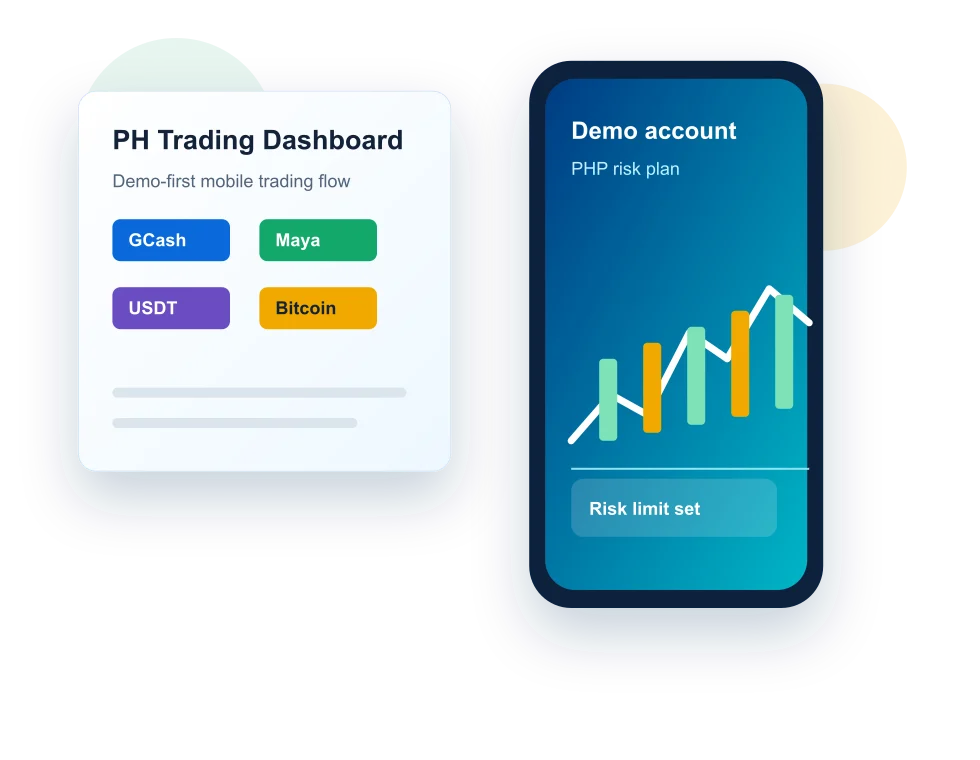
These methods are shown as Philippines research and UX targets. Actual availability must be verified inside the active account cashier before any transfer.
Use only if the method is shown inside the current account cashier and the receiving details match the platform flow.
Check account-name consistency before funding and keep the payment receipt until withdrawal is complete.
Availability may vary by payment provider, account status, and current platform routing.
Expect bank review, transfer limits, and provider cut-off times to affect the actual processing path.
Confirm network, wallet address, fees, and blockchain finality before sending any crypto transaction.
Crypto prices and network fees move quickly; never send a test amount you cannot afford to lose.
Sources and limits
For Payment Methods for Filipino Traders, the review focuses on claims that could affect money, account access, payment records, eligibility, privacy, or trading risk.
FAQ
No availability should be treated as permanent. Check the current account cashier before any payment.
That depends on platform rules, provider routing, KYC, and current payment policy. Keep method consistency whenever possible.
Filipino users budget in PHP, while many platforms show USD balances. Tracking both prevents hidden cost surprises.